Source Wall Mounted Wooden Pegboard for Shop, Home, and Store
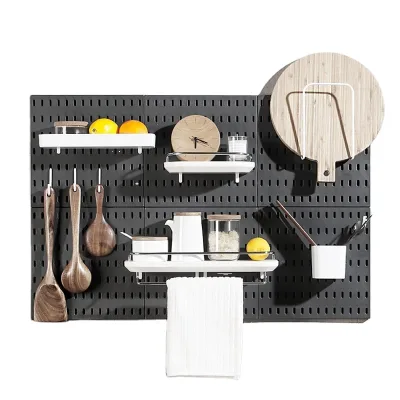
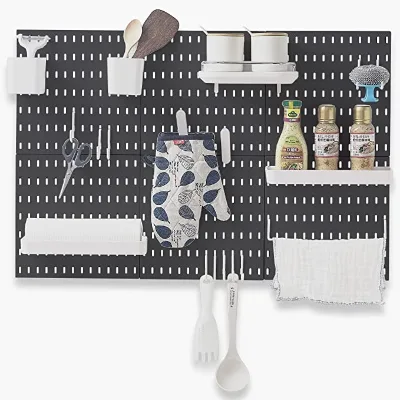
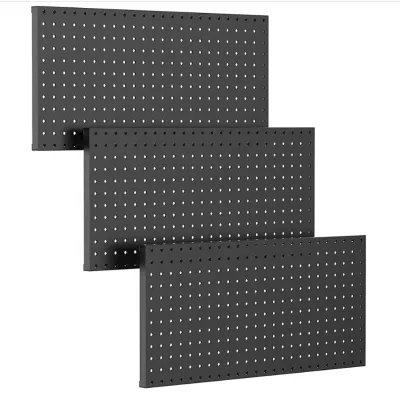
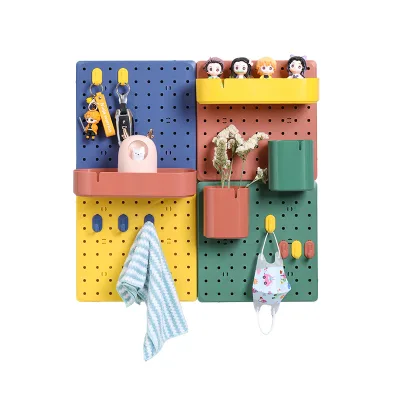
Compare 30 listings for wall mounted wooden pegboard designed for shop, home, and store environments. Buyers can review specifications like size, material, and customization options to find the right solution for indoor decoration and display needs.
Key considerations
Products List







Comprehensive Sourcing Guide
Strategic Sourcing Guide for Wall Mounted Wooden Pegboard Solutions
Understanding Material Composition and Technical Specifications
When sourcing wall-mounted wooden pegboards, the primary distinction lies in the material composition and the resulting structural properties. The available market data indicates a divergence in material types, ranging from engineered wood fibers to solid wood constructions. Buyers must carefully distinguish between products labeled as "Wood Fiber" or "Hardboard/MDF" and those specified as "Wood" or "Solid Wood." The former typically refers to Medium Density Fiberboard (MDF) or similar composite boards, which offer a uniform surface ideal for painting and finishing, while the latter suggests a more robust, natural timber construction often associated with higher durability and specific aesthetic finishes.
A critical technical specification to verify is the board size. The standard dimension observed in the supply chain is 1220mm by 2440mm, which aligns with international sheet goods standards. However, customization is a prevalent attribute, with many suppliers offering sizes "According to Your Request." This flexibility is essential for projects requiring specific cutouts or non-standard panel dimensions. The thickness of the board is another vital parameter; specific listings indicate a thickness of 0.8mm, though this may vary depending on whether the product is a thin decorative backing or a structural panel. Buyers should explicitly confirm the thickness tolerance, as this directly impacts the load-bearing capacity of the pegboard and the security of the mounting hardware.
The production process significantly influences the final product quality. The data highlights a "Dry-Process" method, which is standard for fiberboard manufacturing, ensuring dimensional stability and resistance to moisture compared to wet-process alternatives. Additionally, the finishing process varies, with options ranging from "Painted" to "Antique" finishes. The choice of finish is not merely aesthetic; it determines the board's resistance to wear, humidity, and the specific environment in which it will be installed. For instance, an antique finish might be preferred for retail displays in historic settings, while a painted finish is common for modern retail or industrial storage solutions.
Compliance, Certification, and Regulatory Standards
Navigating the regulatory landscape is a non-negotiable aspect of B2B procurement for wooden building materials. The supply chain data reveals a mix of certifications, with CE and ISO appearing frequently alongside CARB (California Air Resources Board) standards. The presence of CE marking indicates conformity with health, safety, and environmental protection standards for products sold within the European Economic Area. ISO certification, while generic in the provided list, generally implies adherence to quality management systems, which is crucial for consistent manufacturing output.
CARB certification is particularly significant for buyers targeting the North American market, as it addresses formaldehyde emissions from composite wood products. Given that many pegboards are constructed from wood fiber or MDF, verifying CARB compliance is essential to ensure the product meets strict indoor air quality regulations. Furthermore, some listings reference ROHS (Restriction of Hazardous Substances) standards, which limit the use of specific hazardous materials in manufacturing. Buyers must treat these certifications as observations of specific supplier capabilities rather than universal attributes of all wooden pegboards. It is imperative to request current certification documents for every batch, as compliance status can vary between production runs.
The standard dimensions and specifications also serve as a form of regulatory compliance. The observed standard of 1220x2440mm suggests adherence to international sheet goods norms, but buyers should verify if the product meets specific local building codes regarding fire resistance or structural integrity. While some listings mention "New" condition, implying the product is not refurbished, the "Condition" attribute does not replace the need for formal safety testing. For applications in commercial spaces like shops, supermarkets, or drug stores, the fire rating of the wood fiber or solid wood material must be confirmed against local fire safety codes.
Cost Drivers and Pricing Dynamics
The pricing structure for wall-mounted wooden pegboards is influenced by a complex interplay of material type, customization level, and order volume. The observed price range in the market spans from $0.11 to $260 USD, a variance that reflects the difference between raw material costs and finished, customized units. The lower end of the spectrum likely corresponds to standard, uncustomized MDF or wood fiber sheets sold in bulk, whereas the higher end represents specialized solid wood units with custom finishes, specific dimensions, or integrated features like hangers.
Order volume is a primary driver of unit cost. The Minimum Order Quantity (MOQ) ranges from 5 to 3000 units, indicating that suppliers cater to both small-scale boutique projects and large-scale industrial procurement. Buyers purchasing near the lower MOQ threshold should anticipate higher per-unit costs due to the fixed overheads of production setup and logistics. Conversely, orders approaching the 3000-unit mark may benefit from economies of scale, though this requires significant upfront capital and storage capacity.
Customization is another significant cost factor. While "Customization" and "Customized" are listed as available attributes, the extent of this customization directly impacts the price. Requests for specific sizes, non-standard thicknesses, or unique finishes like "Antique" or "Multicolor" will incur additional charges. The "OEM Order" and "Customer Design" attributes suggest that suppliers are willing to adapt products to specific branding or functional requirements, which involves design fees and potentially longer lead times. Buyers must balance the desire for unique specifications against the budget constraints, understanding that every deviation from the standard 1220x2440mm or standard wood fiber composition adds to the final cost.
Typical Applications and Functional Requirements
The versatility of wall-mounted wooden pegboards makes them suitable for a wide array of applications, ranging from residential use to heavy-duty commercial environments. The data identifies usage in "Indoor" settings, specifically highlighting "Shop, Supermarket, Drug Store, Convenient Store," and "Home" environments. In commercial settings, the pegboard serves as a critical organizational tool for displaying merchandise, particularly in retail spaces where visibility and accessibility are paramount. The "Display" style and "Backplane Style" attributes suggest that these boards are often used as the structural backing for retail fixtures.
For home applications, the focus shifts to "Personal Decoration," "Collection," and "Daily Use." The "Creative" style and "Multicolor" options cater to aesthetic preferences in residential spaces, allowing homeowners to create personalized storage solutions for tools, crafts, or decorative items. The "With Trouser Press" characteristic indicates a specialized application for garment storage, demonstrating the adaptability of the pegboard concept to specific household needs. Additionally, the "Feature: Hanger" attribute points to the board's role in supporting hanging accessories, which is essential for both retail display and home organization.
The "Serviceability" attribute, described as "Common Use," implies that these products are designed for general-purpose applications rather than highly specialized industrial tasks. However, the "Weight" classification of "Middle Weight" suggests a balance between portability and durability. Buyers must match the application to the board's load-bearing capacity. For heavy items in a supermarket or warehouse, a solid wood construction with a thicker profile may be necessary, whereas a lighter wood fiber board might suffice for light retail displays or home decor. The "Single Sided" nature of the boards also dictates their installation method, requiring consideration of the wall structure and the intended visibility of the product.
Supplier Evaluation and Geographic Considerations
Evaluating potential suppliers requires a deep dive into their geographic origins and production capabilities. The supply data indicates that products originate from the People's Republic of China, with specific manufacturing hubs identified in Jiangsu and Guilin. Jiangsu is a well-known industrial center with a strong reputation for manufacturing and export, suggesting a robust supply chain and potentially higher quality control standards. Guilin, while perhaps less industrialized, may offer unique artisanal capabilities, particularly for products requiring "Creative" styles or "Antique" finishes.
When assessing suppliers, buyers should prioritize those who explicitly state their ability to handle "OEM Order" and "Customer Design." These capabilities indicate a flexible manufacturing process capable of adapting to specific client needs. The "Production Process" of "Dry-Process" is a positive indicator of modern manufacturing techniques, but buyers should also inquire about the specific machinery and quality control protocols used. The "Condition: New" attribute is a basic requirement, but it should be verified against the supplier's track record for delivering defect-free products.
Logistics and packaging are also critical factors in supplier evaluation. The data lists "Loose Packing and Pallet Packing" as well as "Disassembly Package" and "by Carton" options. The choice of packaging depends on the shipping method and the fragility of the product. For international shipping, pallet packing is often preferred to prevent damage during transit, while disassembly packages may be necessary for large orders to optimize container space. The "Package: Bubble Wrap +Box" option suggests a higher level of protection for delicate items, which is crucial for products with "Antique" or "Multicolor" finishes that could be easily scratched.
Quality Control and Long-Term Procurement Strategy
Establishing a robust quality control (QC) protocol is essential for mitigating risks associated with wooden pegboard procurement. Given the variability in material types and finishes, buyers should implement a multi-stage QC process. The first stage involves verifying the material composition against the agreed specifications, ensuring that "Wood Fiber" or "Solid Wood" matches the order requirements. The second stage focuses on dimensional accuracy, checking that the 1220x2440mm standard or custom dimensions are within acceptable tolerances. The third stage assesses the finish quality, looking for consistency in "Painted" or "Antique" surfaces and ensuring that "Multicolor" designs are applied correctly without bleeding or fading.
Long-term procurement considerations extend beyond the initial purchase. The "Delivery Time" of 45 days observed in the data suggests a moderate lead time, which buyers must factor into their inventory planning. For ongoing supply chains, establishing a relationship with suppliers who can offer consistent lead times is vital. The "MOQ" range of 5 to 3000 allows for flexibility, but buyers should negotiate terms that allow for smaller, more frequent orders if their demand fluctuates.
Sustainability and environmental compliance are increasingly important in long-term strategy. The presence of CARB and ROHS certifications indicates a commitment to environmental standards, but buyers should proactively request data on the source of the wood fiber or solid wood to ensure it comes from sustainable forests. The "Customization" and "OEM" capabilities also offer opportunities for buyers to specify eco-friendly materials or finishes, aligning the product with corporate sustainability goals. Finally, maintaining clear communication channels with suppliers regarding any changes in standards or regulations ensures that the procurement strategy remains compliant and competitive over time.
Comparative Analysis of Product Attributes
To facilitate decision-making, the following table summarizes the key attributes observed in the market, highlighting the distinctions between different product types and their suitability for various applications.
| Attribute Category | Product Type A (Engineered) | Product Type B (Solid Wood) | Product Type C (Custom/Decorative) |
|---|---|---|---|
| Material | Wood Fiber / Hardboard / MDF | Solid Wood | Wood / Wood Fiber |
| Standard Size | 1220x2440mm | 1220x2440mm | According to Request |
| Thickness | 0.8mm (Typical) | Variable | Variable |
| Finish | Painted, Decoration Material Board | Antique, Painted | Multicolor, Creative |
| Certification | CE, ISO, CARB | CE, ROHS | CE, ROHS |
| Primary Usage | Indoor, Shop, Supermarket | Home, Personal Decoration | Home, Gift, Collection |
| Packing | Loose / Pallet | Disassembly / Carton | Bubble Wrap + Box |
| Origin | P. R. China (General) | Jiangsu, China | Guilin, China |
| Customization | Available | Customized | Welcome |
This comparison underscores the importance of aligning product selection with specific project requirements. Type A is ideal for high-volume, standardized retail applications where cost and consistency are paramount. Type B offers superior durability and aesthetic appeal for home or boutique settings. Type C provides the highest level of flexibility for unique design challenges, though it may involve higher costs and longer lead times. By carefully evaluating these attributes, buyers can make informed decisions that balance quality, cost, and functionality.
FAQs
What materials are used for wall mounted wooden pegboards?
These boards are primarily made from wood fiber, MDF, or solid wood. Buyers should verify the specific material type as it affects durability and finish options like painted or antique surfaces.
Which certifications are available for these wooden pegboards?
Common certifications include CE, ISO, CARB, and ROHS. These indicate compliance with safety and environmental standards, particularly important for indoor use in shops or homes.
How can I customize the size of a wooden pegboard?
Customization is available with sizes often matching the standard 1220x2440mm or tailored to your request. Suppliers accept OEM orders and customer designs for specific dimensions and thicknesses.
Can I find suppliers in specific Chinese regions?
Yes, products originate from locations like Jiangsu and Guilin in the People's Republic of China. Buyers can filter by these origins to find manufacturers with specific production capabilities.
What are the typical packaging options for shipping?
Packaging varies from loose and pallet packing to disassembly packages or cartons with bubble wrap. The choice depends on the product type and whether it requires protection for delicate finishes.
How long is the delivery time for custom orders?
Delivery times can extend up to 45 days depending on the order complexity and customization level. Buyers should confirm lead times early to ensure alignment with project schedules.